Qi Gong & Confucian Moderation – FAQ
What does Confucian moderation mean in daily life?
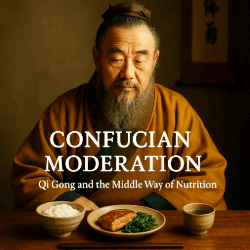
Confucian moderation, described in the Zhong Yong (Doctrine of the Mean), is about living in balance—avoiding excess and deficiency. In practice, it means acting, eating, and speaking with measured purpose.
How does Confucian philosophy connect to Qi Gong?
Both systems emphasize harmony and regulation. Qi Gong expresses moderation through balanced breath, posture, and energy flow—the physical counterpart to Confucian mental and moral balance.
What kind of diet supports Confucian moderation?
A diet based on whole foods, seasonal ingredients, and portion balance reflects Confucian ideals. Think rice, vegetables, moderate protein, and tea—meals that nourish without excess or deprivation.
Is meat allowed in a moderate Qi Gong diet?
Yes, in moderation. Historically, poultry and fish were acceptable sources of qi-nourishing protein, eaten sparingly and respectfully within balanced meals.
How can modern science support this philosophy?
Studies on mindful eating, circadian nutrition, and moderate caloric intake confirm the benefits of balance—improved digestion, metabolism, and emotional health—all central to Confucian and Qi Gong teachings.
What’s a simple way to practice moderation today?
Start with awareness: eat slowly, stop at 80% fullness, limit processed foods, and balance activity with rest. This aligns ancient wisdom with modern health practices.
Medical Disclaimer
This content is for educational purposes and not a substitute for personalized medical advice. Consult a qualified health professional for dietary or medical concerns.