Frequently Asked Questions
What is the late-summer Qi diet?
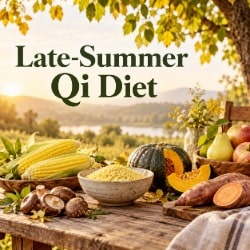
The late-summer Qi diet is a seasonal approach inspired by traditional Chinese dietary theory. As peak summer begins giving way to autumn, the emphasis gradually shifts from very cooling and water-rich foods toward somewhat warmer, more substantial foods such as grains, squash, sweet potatoes, mushrooms, corn, and cooked fruit.
It is better understood as a change in emphasis than as a strict diet with required or forbidden foods.
When does late summer begin in traditional Chinese medicine?
There is no single modern calendar date that perfectly defines late summer. Traditional Chinese sources associate Earth with late or long summer, while some classical interpretations also connect Earth with the transitional periods between seasons.
For practical seasonal eating, it makes more sense to notice changes in local temperature, daylight, weather, and available foods than to switch diets on a particular date.
What foods are traditionally associated with late summer?
Foods commonly used in a late-summer style of eating include grains such as millet and rice, corn, squash, sweet potatoes, mushrooms, beans, and naturally sweet seasonal fruits such as pears and apples.
The traditional association of Earth with the sweet flavor refers primarily to the natural mild sweetness found in foods such as grains, vegetables, and fruit—not to refined sugar or desserts.
Should I stop eating cooling summer foods in late summer?
No. Seasonal eating does not require abruptly eliminating foods such as cucumber, melon, or other summer produce.
Instead, the balance of the meal can gradually change. Cooling foods may remain on the table while cooked grains, vegetables, soups, squash, and other more substantial foods become more prominent as the weather changes.
Why are the Spleen and Stomach associated with late summer?
In traditional Chinese medicine, the Spleen and Stomach form part of a functional system associated with nourishment and the transformation of food. This system is traditionally linked with the Earth phase and late summer.
These terms describe a traditional medical framework. They should not be interpreted as biomedical claims about the anatomical spleen or stomach.
Is a late-summer diet supported by modern nutrition science?
Modern nutrition does not recognize Spleen qi, the Five Phases, or a medically necessary late-summer diet.
However, many foods commonly emphasized in late-summer Chinese dietary traditions—such as whole grains, vegetables, legumes, mushrooms, and fruit—also fit comfortably within modern recommendations for a varied, nutrient-rich diet.
The traditional and modern systems arrive at these foods for different reasons.
Is millet particularly good for late summer?
Millet fits the traditional late-summer pattern well because it is a mildly flavored grain that works in porridges, grain bowls, soups, and savory dishes. It also provides nutrients and can contribute to dietary variety.
There is no modern medical requirement to eat millet during late summer, however. Rice, oats, barley, and other grains can also be used according to individual preferences and nutritional needs.
Can I follow a late-summer Qi diet if I don’t practice Qi Gong?
Yes. The recipes and seasonal principles can be used independently of Qi Gong practice.
For Qi Gong practitioners, seasonal eating can be viewed as one part of a broader practice of adapting activity, rest, food, and training to changing environmental conditions. Someone interested only in seasonal cooking can use the same recipes without adopting the traditional energetic model.
How does the late-summer diet transition into an autumn diet?
The change should generally be gradual. As temperatures cool, meals may become warmer and more cooked, with increasing use of soups, grains, root vegetables, mushrooms, squash, and cooked fruits.
Late summer therefore acts as a bridge between the lighter, more cooling foods of peak summer and the warmer culinary character of autumn.