Qi Gong Diets for Arid and High-Desert Regions
Qi Gong dietary guidance for arid and high-desert regions, focusing on yin preservation, moisture support, hydration strategies, and foods suited for dry climates and low humidity.
Flagstaff, AZ USA
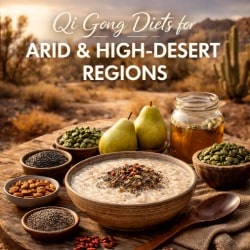
Living and training in an arid or high-desert environment places unique demands on the body. Low humidity, wide temperature swings, intense sun exposure, and persistent wind quietly drain fluids and stress connective tissue long before thirst appears. For practitioners of qi gong, these conditions require dietary choices that do more than fuel movement—they must protect yin, preserve fluids, and stabilize internal rhythms.
A qi gong diet for desert regions is not about restriction or exotic rules. It is about counterbalancing dryness with nourishment, using foods that hydrate at a cellular level, protect digestion, and support steady energy without overheating the system.
This approach aligns closely with classical Chinese medicine while finding strong support in modern hydration and nutrition research.
In classical theory, arid climates intensify dryness (zao)—a condition associated with fluid depletion, skin and joint discomfort, brittle tendons, shallow breathing, and restless sleep. Dryness most often affects the Lungs and Kidneys, which govern respiration, fluid regulation, and long-term vitality.
The Huangdi Neijing repeatedly warns that prolonged dryness weakens yin and damages the body’s ability to anchor yang activity. For qi gong practitioners, this can show up as:
Difficulty relaxing after practice
Tight hips, knees, and lower back
Dry mouth or throat without strong thirst
Irritability or heat sensations despite fatigue
Diet becomes a preventive practice, not just a response to symptoms.
A qi gong diet for dry climates emphasizes internal moisture, not surface hydration alone. Cold drinks and excessive raw foods often worsen digestive weakness, especially in windy or cool desert nights.
Instead, the goal is to hydrate through structure—foods that carry water, minerals, and fats together so fluids are absorbed and retained.
Preserving yin and blood
Supporting gentle digestive warmth
Preventing excessive sweating and fluid loss
Avoiding overheating foods in already dry environments
Congee—slow-cooked rice porridge—is one of the most effective foods for arid regions. Properly prepared, it hydrates without burdening digestion and serves as a delivery system for yin-supportive ingredients.
Why congee works in low humidity:
Warm, moist texture supports fluid absorption
Gentle on digestion, even during seasonal transitions
Easily customized for climate and constitution
Pear (lightly cooked): moistens Lung yin
Black sesame: nourishes Kidney yin and joints
Goji berry: supports blood and eye moisture
Almond (sweet): calms dryness-related coughing
This combination aligns closely with classical recommendations for dryness while remaining nutritionally balanced.
In arid regions, fats matter. Not excess, but the right kinds. Seeds and oils provide lubrication for joints, fascia, and skin—areas most affected by desert conditions.
Black sesame seeds – classical yin tonic
Chia seeds – modern hydration support via soluble fiber
Flaxseed – supports digestion and connective tissue
Pumpkin seeds – mineral-dense and grounding
Modern nutrition research confirms that soluble fiber slows fluid loss and improves hydration retention, especially during exercise in dry air.
Used in moderation, these foods support long practice sessions without heaviness.
Protein is necessary for recovery, but certain preparations increase internal dryness—especially grilled, fried, or heavily spiced meats.
Stewed or braised meats
Bone broths and collagen-rich soups
Eggs prepared softly (poached, lightly scrambled)
Tofu and tempeh in warming broths
Bone broth, in particular, bridges classical and modern perspectives. Traditional texts emphasize marrow and essence, while contemporary research highlights collagen, glycine, and mineral content supporting joint health and recovery.
Raw vegetables are often promoted for hydration, but in arid climates they can weaken digestion and worsen dryness over time.
Instead, lightly cooked vegetables with high water content are preferred:
Zucchini
Winter squash
Spinach and chard
Carrots and parsnips
Steaming or light sautéing preserves moisture while protecting digestive fire—critical for qi production.
Hydration in low-humidity climates is about timing and composition, not volume alone.
Warm or room-temperature fluids
Small, frequent sips rather than large intakes
Soups and broths counted as hydration
Avoiding excessive caffeine and alcohol
Electrolyte balance matters more in arid regions due to insensible fluid loss through respiration and skin. This aligns with modern sports nutrition findings that emphasize sodium and potassium for hydration efficiency—especially during movement practices like qi gong.
Certain foods increase dryness or heat when consumed regularly in desert regions:
Excessively spicy foods
Charred or smoked meats
Large quantities of coffee
Refined sugars
Very dry snack foods (chips, crackers)
These do not need elimination, but should be contextual, paired with moistening foods and adequate recovery.
High-desert regions often experience sharp seasonal shifts. Diet should adjust accordingly:
Summer: lighter congee, more vegetables, cooling fruits lightly cooked
Autumn: increased seeds, pears, and soups
Winter: thicker broths, root vegetables, marrow-rich foods
Qi gong practice remains stable, but diet shifts to protect yin reserves as environmental stress increases.
Diet and qi gong work best when aligned. On heavy practice days, meals should emphasize:
Warm, moist foods before practice
Light, mineral-rich recovery meals afterward
Avoiding heavy digestion late at night
This approach supports deeper relaxation, smoother breathing, and better long-term joint health—key concerns for practitioners in dry climates.
Arid environments accelerate aging patterns associated with dryness: joint stiffness, skin thinning, sleep disturbance, and nervous system fatigue. A qi gong diet for desert conditions acts as preventive medicine, preserving vitality rather than reacting to decline.
Classical wisdom and modern nutrition agree on one point: hydration is structural, not superficial.
When food carries moisture, minerals, and warmth together, the body holds what it needs—and lets go of what it doesn’t.
Huangdi Neijing (Yellow Emperor’s Classic of Internal Medicine) – Classical Chinese Medicine
Pitchford, P. Healing with Whole Foods
Chen, J., & Chen, T. Chinese Medical Herbology and Dietetics
Popkin, B. et al. “Water, Hydration, and Health.” Nutrition Reviews
Sawka, M. et al. “Exercise and Fluid Replacement.” American College of Sports Medicine
Wolfson, J. “Dietary Fats and Joint Health.” Journal of Nutrition Science
Carry your practice beyond the mat.
The Refined Qi Gong Collection blends stillness and style — inspired by the same principles you train with.
Arid and high-desert environments accelerate fluid loss through respiration and skin evaporation. Without dietary support, this dryness can strain joints, connective tissue, and recovery. A qi gong diet adapted for dry climates focuses on preserving internal moisture rather than relying on surface hydration alone.
Foods that gently hydrate and nourish digestion work best. These include warm grain porridges, soups, lightly cooked vegetables, seeds, and mineral-rich broths. Such foods help the body retain fluids while supporting steady energy during qi gong practice.
Drinking water alone is often insufficient in dry environments. Fluids are better retained when paired with food, minerals, and gentle warmth. Soups, broths, and hydrated grains support deeper hydration than cold or excessive plain water.
Large amounts of raw food can weaken digestion and worsen dryness over time, especially in high-desert climates with strong temperature swings. Lightly cooked foods are generally better tolerated and more supportive for long-term qi gong practice.
Dry climates tend to affect joints and connective tissue first. Diets that include healthy fats, seeds, and collagen-rich foods help maintain lubrication and elasticity, supporting smoother movement and recovery after practice.
Yes. While designed for arid and high-desert environments, these principles can be adapted for anyone experiencing dryness, high physical output, or seasonal fluid loss. Adjustments should be made based on climate and individual response.
High-Desert Congee for Qi Gong Practice
Qi Gong and Nutrition: How Food Fuels Energy, Balance, and Longevity
Geography and Qi Gong Diets: How Climate and Location Shape Energetic Nutrition
What Is Qi Gong? A Beginner’s Guide to Energy Healing
Buddhism, Vegetarianism, and Qi Gong: How Buddhist Diets Shaped East Asian Qi Gong Traditions
Qi Gong and Confucian Moderation: The Art of Balance in Practice and Life
Qi Gong and Autumn Eating: Roots, Grains, and Seasonal Transition