Flagstaff, AZ USA

What to Eat Before and After Qi Gong Practice

What should you eat before and after Qi Gong practice? This guide explains pre Qi Gong meals, post practice nutrition, hydration, and how to structure a simple Qi Gong diet for beginners and athletes seeking stable energy and recovery.
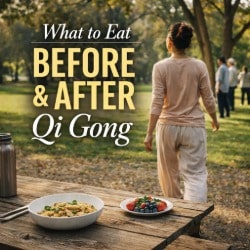
Woman leaving a healthy meal at a park table to join a small group practicing qi gong outdoors

Qi Gong Diet Guide

Qi Gong may look gentle.

There is no sprinting. No heavy lifting. No sparring rounds.

But Qi Gong changes physiology.

Breathing patterns influence vagal tone.
Stress hormones shift.
Blood pressure adjusts.
Inflammatory markers improve over time.

Because Qi Gong works through the nervous system, what you eat before and after Qi Gong practice directly affects how well it works.

This guide explains:

  • What to eat before Qi Gong

  • What to eat after Qi Gong

  • Whether you should practice fasted

  • How to structure a simple Qi Gong diet

  • How athletes should adjust nutrition around practice

Should You Eat Before Qi Gong?

Yes — but timing and portion size matter.

Most people benefit from eating 1–2 hours before Qi Gong practice, or having a small snack 30–60 minutes beforehand.

The goal is simple:

  • Stable blood sugar

  • Light digestion

  • Mental clarity

  • Calm energy

Practicing too full or too fasted both interfere with performance.

What Happens If You Practice Qi Gong on a Full Stomach?

A large meal redirects blood flow toward digestion. Post-meal fatigue is common, especially after high-fat or high-sugar meals (Ludwig, JAMA, 2002).

During Qi Gong this may feel like:

  • Sluggishness

  • Mental fog

  • Nausea

  • Poor posture endurance

Qi Gong requires internal awareness. Overeating dulls that awareness.

What Happens If You Practice Qi Gong Fasted?

Some practitioners tolerate fasted Qi Gong well. Others experience:

  • Irritability

  • Shaking

  • Lightheadedness

  • Reduced focus

Those with blood sugar instability or metabolic conditions should exercise caution and consult a medical professional before changing meal timing.

For most beginners, a light pre Qi Gong meal improves stability.

What to Eat Before Qi Gong (Best Pre Qi Gong Meal Options)

The best pre Qi Gong meal is:

  • Moderate in size

  • Balanced in macronutrients

  • Low in refined sugar

Ideal Structure:

  • Complex carbohydrate

  • Lean protein

  • Moderate healthy fat

Examples of What to Eat Before Qi Gong:

  • Oatmeal with walnuts and berries

  • Eggs with spinach and whole-grain toast

  • Rice with vegetables and a small portion of chicken

  • Sweet potato with yogurt and seeds

  • Apple with almonds (light snack)

  • Yogurt with berries

Complex carbohydrates provide steady glucose. Protein prevents crashes. Moderate fat slows absorption without heaviness.

Research shows balanced meals produce more stable blood sugar curves than high-glycemic meals (Brand-Miller et al., AJCN, 2003).

Stable glucose supports attention, posture control, and nervous system regulation.

What to Avoid Before Qi Gong

If the goal is optimal Qi Gong performance, avoid:

  • Fried foods

  • Heavy red meat meals

  • Sugary drinks

  • Alcohol

  • Energy drinks

  • Large refined carbohydrate portions

High-glycemic meals cause rapid insulin spikes followed by crashes. Blood sugar volatility impairs concentration and may increase inflammatory signaling (Brand-Miller et al., 2003).

Qi Gong depends on internal rhythm. Spikes disrupt rhythm.

What to Eat After Qi Gong Practice

Post Qi Gong nutrition does not need to resemble high-intensity workout recovery.

Qi Gong is regulatory, not glycogen-depleting.

However, post practice is an ideal time to reinforce metabolic stability.

Studies suggest mind-body practices improve insulin sensitivity and reduce inflammatory markers over time (Oh et al., Am J Health Promot, 2010).

Post Qi Gong meals should support:

  • Muscle maintenance

  • Blood sugar balance

  • Anti-inflammatory patterns

  • Calm energy

Best Post Qi Gong Nutrition Structure

A simple recovery plate works well:

  • Lean protein (fish, eggs, tofu, poultry)

  • Complex carbohydrate (quinoa, rice, sweet potato)

  • Vegetables

  • Healthy fat (olive oil, avocado)

Protein intake is particularly important for adults over 40 to reduce age-related muscle loss (Phillips & Van Loon, J Sports Sci, 2011).

Even though Qi Gong is gentle, muscle tissue still benefits from adequate amino acids.

Anti-Inflammatory Foods to Support Qi Gong

If Qi Gong is practiced for stress reduction, joint health, or longevity, diet should reinforce those goals.

Evidence-supported anti-inflammatory foods include:

  • Fatty fish (omega-3 fatty acids)

  • Leafy greens

  • Berries

  • Turmeric

  • Ginger

  • Extra virgin olive oil

Omega-3 intake is associated with reduced inflammatory cytokines (Calder, Proc Nutr Soc, 2013).

Qi Gong lowers stress-driven inflammation. Nutrition can extend that effect.

Qi Gong Diet for Athletes

Athletes often ask:

Should Qi Gong nutrition be different from strength or sparring days?

Yes.

High-output training demands higher carbohydrate intake. Qi Gong-only days do not.

Overfueling on low-output days may lead to:

  • Digestive heaviness

  • Excess caloric intake

  • Elevated inflammation

  • Reduced metabolic flexibility

The effective Qi Gong diet is moderate, stable, and responsive to training volume.

Hydration Before and After Qi Gong

Even mild dehydration reduces cognitive performance (Ganio et al., J Nutr, 2011).

Drink water before practice.

Warm water or mild herbal tea supports parasympathetic activation. Large caffeine doses immediately before breath-centered practice may counteract calming effects.

Hydration is often more important than macronutrient detail for short sessions.

Simple Sample Qi Gong Nutrition Day

Morning Qi Gong

6:15 – Yogurt with berries
8:00 – Eggs, vegetables, whole-grain toast

Midday Qi Gong

10:30 – Oatmeal with nuts
1:00 – Chicken, rice, vegetables

Evening Qi Gong

4:30 – Apple with almonds
7:00 – Salmon, quinoa, broccoli

No extreme diet. No special powders required.

Just stability.

The Core Principle Behind the Qi Gong Diet

Traditional Taoist thought emphasizes moderation:

Not too full.
Not too empty.
Not too stimulating.
Not depleted.

Modern metabolic science aligns closely with this.

  • Stable glucose

  • Adequate protein

  • Anti-inflammatory fats

  • Proper hydration

  • Appropriate timing

Qi Gong practice regulates the nervous system.

Nutrition supports that regulation.

Over months and years, small daily alignments produce measurable physiological change.

When your practice ends, the reflection continues.

Designed for practitioners — wearables, journals, and keepsakes shaped by stillness.

Explore the Refined Qi Gong Collection →

References

Jerath R et al. Physiology of long pranayamic breathing. Med Hypotheses. 2006.
Ludwig DS. Glycemic index and obesity. JAMA. 2002.
Brand-Miller JC et al. Glycemic index and chronic disease risk. AJCN. 2003.
Phillips SM, Van Loon LJC. Dietary protein for athletes. J Sports Sci. 2011.
Oh B et al. Qigong and inflammation markers. Am J Health Promot. 2010.
Calder PC. Omega-3 fatty acids and inflammation. Proc Nutr Soc. 2013.
Ganio MS et al. Mild dehydration and cognitive performance. J Nutr. 2011.

Frequently Asked Questions About What to Eat Before and After Qi Gong

Should you eat before Qi Gong?

Yes, most people benefit from eating 1–2 hours before Qi Gong practice or having a light snack 30–60 minutes beforehand. The goal is stable blood sugar and mental clarity without digestive heaviness.

What is the best pre Qi Gong meal?

The best pre Qi Gong meal includes complex carbohydrates, lean protein, and moderate healthy fats. Examples include oatmeal with nuts, eggs with vegetables, rice with chicken, or yogurt with berries.

Can you practice Qi Gong on an empty stomach?

Some people tolerate fasted Qi Gong well. However, beginners or those with unstable blood sugar may experience dizziness or irritability. A small snack before practice can improve stability.

What should you eat after Qi Gong practice?

After Qi Gong, eat a balanced meal containing lean protein, complex carbohydrates, vegetables, and healthy fats. This supports muscle maintenance, metabolic stability, and recovery.

Does Qi Gong require a special diet?

No special diet is required. A simple, balanced approach emphasizing stable blood sugar, adequate protein, hydration, and anti-inflammatory foods works well with Qi Gong practice.

Is hydration important before Qi Gong?

Yes. Even mild dehydration can reduce focus and increase fatigue. Drinking water before practice supports nervous system regulation and performance.

Leave a Reply